


Nausea on a GLP‑1 is very common — and manageable.
Here's why it happens, and how GLPrelief's ginger and chamomile support everyday digestive comfort.*
Free shipping on every order.
- Free shipping on every order.
- Why this happens
- When to check in
- Common questions
- Formulated by George W. Carroll, MD · 45 years in medical weight loss
Why this happens
You're not imagining it — and you're not alone.
For many people, nausea doesn’t simply fade. In Dr. Carroll’s experience, more than half of people on a GLP-1 deal with it throughout treatment, and it often comes back with each dose increase.
GLP-1 medications like Ozempic, Wegovy, Mounjaro and Zepbound work by mimicking a natural hormone that slows gastric emptying — the rate at which food leaves your stomach. That's part of how they reduce appetite and support weight loss. But a slower stomach means food sits longer than your body is used to, and that can trigger nausea, especially when your system is still adapting.
The medication also activates receptors in the brainstem that regulate fullness signals. Your brain is receiving stronger "full" messages than it's accustomed to, which can register as queasiness rather than satisfied fullness while it recalibrates.
It is often strongest in the first 1–2 weeks at each dose level, and it tends to return with each dose increase.
This is not a sign that something is wrong. It is a known effect of how the medication works — and you don’t have to just put up with it.

How GLPrelief helps
Ginger and chamomile, in one daily drink.
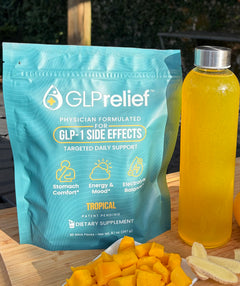
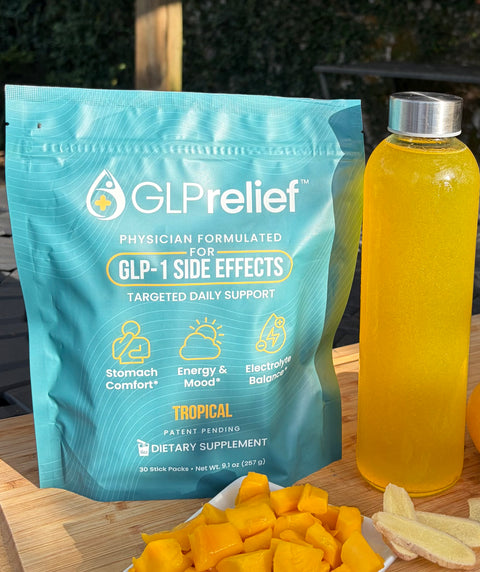
GLPrelief’s ginger root extract and chamomile flower extract support everyday digestive comfort.* Alongside four electrolytes, six B vitamins and gentle soluble fiber. Mix one pack into 16–20 oz of cold water.
- Ginger root extract (5% gingerols)
- Chamomile flower extract 10:1
- Four electrolytes
- Six B vitamins
30-day supply · from $59. Free shipping on every order.
*These statements have not been evaluated by the Food and Drug Administration. This product is not intended to diagnose, treat, cure, or prevent any disease.
When is nausea expected, and when should you check in?
Knowing what's typical takes a lot of anxiety off the table.
Common on a GLP-1
Talk to your provider if you experience
What can help with nausea during GLP-1 use?
These are general wellness strategies that many people find helpful. They're not medical advice — talk to your healthcare provider about what's right for your situation.
Eat smaller, more frequently
Five to six small portions throughout the day are generally better tolerated than three large meals. When your stomach is emptying more slowly, less volume per sitting means less discomfort.
Hydrate between meals, not during
Sipping water and electrolyte drinks steadily between meals helps with hydration without adding volume to an already slow-moving stomach. Avoid large amounts of liquid with food.
Choose foods that feel gentle
Broths, smoothies, yogurt, crackers, and soft proteins are easier on a sensitive stomach. Many people find cold or room-temperature foods more tolerable than hot meals, and bland textures easier than rich or fatty ones.
Consider ginger
Ginger has been studied extensively for its ability to support stomach comfort. Ginger tea, ginger chews, or a standardized ginger extract (look for products standardized to gingerol content) are traditional strategies with published research support.
Time your meals around your dose
For weekly injectables, some people experience stronger nausea in the first 24–48 hours after injection. Planning lighter meals during that window — and saving larger or richer foods for later in the week — can help your body adjust more smoothly.
Common questions about nausea and GLP-1 medications
Answers based on published clinical data and prescribing information.
Yes. Nausea is the most commonly reported experience among GLP-1 medication users, affecting 44% of adults taking Wegovy (semaglutide 2.4 mg) in its obesity trials, against 16% on placebo. It is often strongest in the first 1–2 weeks at each dose level and around dose increases. If nausea is severe or persistent, contact your prescribing physician.
It varies. Nausea is often strongest in the first 1–2 weeks at a new dose and often comes back with each dose increase. For many people it does not simply fade: in Dr. Carroll’s experience, more than half of people on a GLP-1 deal with it throughout treatment. If nausea keeps you from eating normally, or persists beyond one month at the same dose level, talk with your healthcare provider.
Common triggers include large meals, eating too quickly, high-fat or greasy foods, strong smells, and dehydration. Many people find that smaller, more frequent meals, hydrating between meals rather than during, and choosing bland or cool-temperature foods help reduce the intensity.
Ginger has centuries of traditional use and published clinical research supporting its role in promoting stomach comfort. The active compounds responsible — gingerols — are what researchers have focused on. Look for standardized ginger extracts (standardized to gingerol content) for a consistent, measurable dose. GLPrelief contains ginger root extract standardized to ≥5% gingerols.
Contact your healthcare provider if nausea is severe enough to prevent eating or drinking for more than 24 hours, if you experience frequent vomiting, if symptoms persist beyond one month at the same dose, or if you notice sharp abdominal pain, dizziness, or anything that feels alarming. Your provider can adjust dosing or timing if needed.
Ozempic and the other GLP-1 medications slow gastric emptying, so food stays in your stomach longer than your body is used to. They also act on brainstem receptors that regulate fullness. Both effects can register as queasiness while your system adapts, which is why nausea is most noticeable in the first weeks and after each dose increase.
Some people include targeted nutritional support as part of their broader wellness routine during GLP-1 use. GLPrelief is a physician-formulated daily supplement containing ginger root extract, L-Theanine, six B vitamins, electrolytes, and gentle fiber in one convenient stick pack. As with any supplement, we recommend discussing it with your healthcare provider.
Related topics
Your First 30 Days
Week-by-week guide to what most people experience.
Read the guideDigestive Changes
Constipation, bloating, and shifts in regularity.
Read the guideWhy Side Effects Happen
The physiology behind GLP-1 adaptation.
Read the guideGLP-1 Clinical Realities
What the research says about life on GLP-1 therapy.
Read the explainerHave questions?
Reach out to our team, or talk to your healthcare provider about what's right for your situation.
Contact usReady to feel like yourself?
GLPrelief is a physician-formulated daily drink with ginger root extract, chamomile, L-theanine, six B vitamins, four electrolytes and gentle fiber — to support everyday digestive comfort on a GLP‑1.*
Shop GLPrelief*These statements have not been evaluated by the Food and Drug Administration. This product is not intended to diagnose, treat, cure, or prevent any disease. If side effects feel severe, persistent, or worrying, talk with your healthcare provider.