

Skip to content

Cart

Your cart is empty

GLP-1 Side Effect Guide

The tiredness is real.
It's not in your head.

Fatigue and brain fog affect up to 40% of GLP-1 users — driven by reduced caloric intake, shifting micronutrient levels, and dehydration. Most people find it improves as eating and hydration patterns stabilize.

Why this happens

What causes fatigue and brain fog during GLP-1 use?

When your appetite decreases significantly — which is part of how GLP-1 medications work — your overall caloric intake drops. That means less fuel for energy, but also fewer vitamins and minerals from food. B vitamins, magnesium, and electrolytes are especially important for cellular energy and mental clarity, and they're among the first nutrients to fall short when food intake decreases.

Add in the dehydration that often accompanies reduced eating and drinking, and fatigue and brain fog become a predictable part of the adjustment period — not a sign that something is wrong with you or your medication.

Reduced caloric intake means less fuel — and fewer micronutrients from food
B vitamins and magnesium are essential cofactors for energy metabolism
Even mild dehydration affects focus, energy, and cognitive performance

When is fatigue expected, and when should you check in?

Feeling tired or mentally foggy during the first few weeks — especially around dose changes — is a common part of adjusting.

Common during adjustment

Mild tiredness, especially in the first weeks or after a dose increase
Occasional difficulty concentrating or feeling mentally "slow"
Lower energy than usual, particularly in the afternoon
Improvement as eating and hydration patterns stabilize

Talk to your provider if you experience

Fatigue severe enough to affect daily functioning
Dizziness or lightheadedness
Cognitive changes that feel significant or don't improve after several weeks at the same dose
Persistent low mood or motivation changes beyond normal adjustment

What can help with fatigue and brain fog during GLP-1 use?

These are general wellness strategies that many people find helpful. They're not medical advice — talk to your healthcare provider about what's right for your situation.

01

Stay hydrated — even when you're not thirsty

When you're eating less, you're also taking in less water from food. Many people on GLP-1 medications don't feel thirsty even when mildly dehydrated — and even mild dehydration affects energy and concentration. Sip water and electrolyte drinks steadily throughout the day.

02

Eat nutrient-dense, even when portions are small

When your appetite is reduced, every bite counts more. Prioritize foods rich in B vitamins, magnesium, and protein — eggs, leafy greens, nuts, fish, and lean meats. Even small portions of nutrient-dense foods support your body's energy needs better than larger portions of low-nutrient options.

03

Protect your sleep — it matters more right now

When your body is adjusting to a new medication and taking in fewer calories, quality sleep becomes even more important. Consistent sleep and wake times, a cool dark room, and limiting screens before bed are foundational. If your energy is low during the day, resist the urge to nap late — it can disrupt your overnight sleep cycle.

04

Move gently and consistently

Light movement — a short walk, stretching, or yoga — can help with energy levels even when you feel tired. The goal isn't intense exercise; it's maintaining baseline activity that supports circulation, mood, and metabolic function during a period of caloric adjustment.

Common questions about digestive changes on GLP-1 medications

Answers based on published clinical data and prescribing information.

GLP-1 medications slow the transit of food through the entire digestive tract. When stool moves more slowly through the colon, more water is absorbed, making stools harder and less frequent. Reduced food and fiber intake compounds the effect. Hydration, gentle fiber, and light movement are the most commonly recommended strategies.

Some people experience loose stools or urgency, particularly in the first 1–2 weeks as the GI tract adjusts to new hormonal signaling. This typically stabilizes. If diarrhea persists beyond a week or is accompanied by dehydration symptoms, contact your healthcare provider.

Most digestive changes settle within 4–8 weeks as the body adapts. Some people experience a brief return of symptoms with dose escalation before stabilizing again. If digestive issues remain significant after 8 weeks at a stable dose, talk with your prescribing physician about adjustments.

Soluble, non-fermentable fibers are generally the best tolerated. Resistant dextrin and psyllium husk add bulk and support regularity without the gas and bloating that rapidly fermentable fibers like inulin and FOS can cause. Increase fiber gradually — adding too much at once can temporarily worsen bloating.

Contact your healthcare provider if you have no bowel movement for 3 or more days with discomfort, persistent diarrhea lasting more than a week, severe bloating or abdominal distension, blood in stool, sharp abdominal pain, or any symptom that feels alarming.

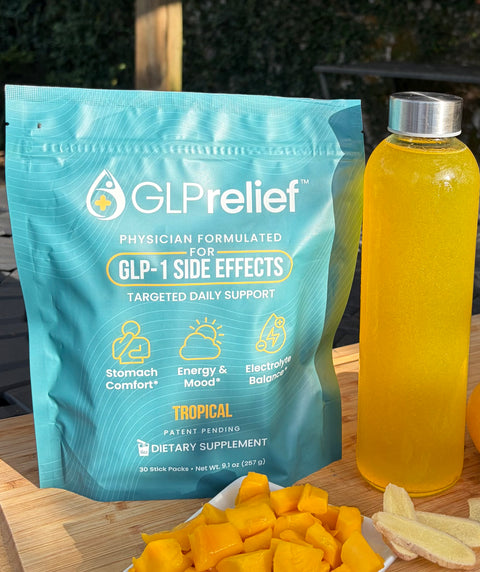
Some people include targeted nutritional support as part of their broader wellness routine. GLPrelief contains resistant dextrin fiber (a gentle, non-fermentable prebiotic fiber), magnesium malate (a GI-gentle form that supports regularity without laxative urgency), ginger root extract, and chamomile — all in a physician-formulated daily stick pack. As with any supplement, discuss it with your healthcare provider.

Have questions?

Reach out to our team, or talk to your healthcare provider about what's right for your situation.

Contact us

Ready to feel like yourself?

GLPrelief is a physician-formulated daily supplement with Rhodiola Rosea, L-Theanine, active-form B vitamins, magnesium malate, and balanced electrolytes — designed to support your body through the adjustment period.

Shop GLPrelief

*These statements have not been evaluated by the Food and Drug Administration. This product is not intended to diagnose, treat, cure, or prevent any disease. If side effects feel severe, persistent, or worrying, talk with your healthcare provider.

Why do GLP-1 medications cause fatigue and brain fog?

Fatigue and difficulty concentrating are among the most commonly reported experiences during GLP-1 use — affecting up to 40% of people in clinical trials. If you're feeling tired, foggy, or mentally slower than usual, you're not imagining it, and you're not alone. These are well-documented experiences that most people navigate, especially in the first weeks.

expectations

When is fatigue expected, and when should you talk to your doctor?

Feeling tired or mentally foggy during the first few weeks — especially around dose changes — is a common part of adjusting to GLP-1 medication. For most people, it improves as the body adapts and daily routines stabilize.

Common during adjustment

Mild tiredness, occasional difficulty concentrating, lower energy than usual — particularly in the first few weeks or after a dose increase. Often improves as eating and hydration patterns stabilize.

Talk to your provider

Fatigue that is severe enough to affect your daily functioning. Dizziness or lightheadedness. Cognitive changes that feel significant or don't improve after several weeks at the same dose. Or anything that concerns you — trust your instincts and contact your prescribing physician.

Physiology

What causes fatigue and brain fog during GLP-1 use?

When your appetite decreases significantly — which is part of how GLP-1 medications work — your overall caloric intake drops. That means fewer calories for energy, but also fewer vitamins and minerals from food. B vitamins, magnesium, and electrolytes are especially important for cellular energy and mental clarity, and they're among the first nutrients to fall short when food intake decreases. Add in the dehydration that often accompanies reduced eating and drinking, and fatigue and brain fog become a predictable part of the adjustment period.

  • Reduced caloric intake means less fuel — and fewer micronutrients from food
  • B vitamins and magnesium are essential cofactors for energy metabolism
  • Dehydration compounds the effect — even mild dehydration affects focus and energy

Video

strategies

What can help with fatigue and brain fog during GLP-1 use?

These are general wellness strategies that many people find helpful. They're not medical advice — talk to your healthcare provider about what's right for your situation.

01 Stay hydrated — even when you're not thirsty

When you're eating less, you're also taking in less water from food. Many people on GLP-1 medications don't feel thirsty even when they're mildly dehydrated — and even mild dehydration can affect energy and concentration. Sip water and electrolyte drinks steadily throughout the day.

02 Eat nutrient-dense, even when portions are small

When your appetite is reduced, every bite counts more. Prioritize foods rich in B vitamins, magnesium, and protein — eggs, leafy greens, nuts, fish, and lean meats. Even small portions of nutrient-dense foods can help support your body's energy needs better than larger portions of low-nutrient options.

03 Protect your sleep — it matters more right now

When your body is adjusting to a new medication and taking in fewer calories, quality sleep becomes even more important. Consistent sleep and wake times, a cool dark room, and limiting screens before bed are foundational. If your energy is low during the day, resist the urge to nap late — it can disrupt your overnight sleep cycle.