


Muscle cramps, tightness, and hydration shifts are common on GLP‑1s — and addressable.
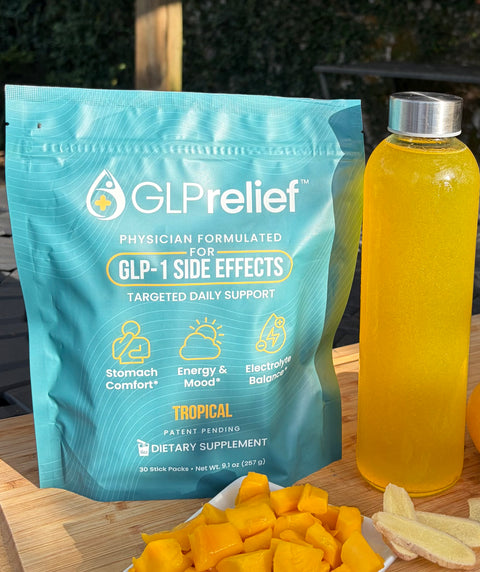
Electrolyte shifts can trigger cramps on a GLP‑1. GLPrelief replenishes four key electrolytes in one daily drink.*
Free shipping on every order.
- Free shipping on every order.
- Why this happens
- When to check in
- Common questions
- Formulated by George W. Carroll, MD · 45 years in medical weight loss
Why this happens
Why cramps turn up — and when they are worth a call.
When you start a GLP-1 medication, your appetite naturally decreases and food intake drops. You eat less, and you often drink less too — simply because you’re less hungry and less thirsty. The result: fewer electrolytes entering your system, especially sodium, potassium, and magnesium.
Sodium, potassium and magnesium all matter for normal muscle and nerve function. That is why staying ahead of hydration and electrolytes is worth doing deliberately while you are eating less, rather than leaving it to thirst.
Cramps are most common in the first few weeks at a new dose, and for most people they ease from there.
Cramps are common on a GLP-1, but they are not something to self-diagnose. Cramps that are severe or persistent, or that arrive alongside dizziness, palpitations or confusion, are worth a same-day call to your prescribing clinician — that is a situation for testing, not a supplement.

How GLPrelief helps
Four key electrolytes, in one daily drink.
GLPrelief replenishes the electrolytes that shift when you eat and drink less on a GLP-1, to support hydration and electrolyte balance.* Mix one pack into 16–20 oz of cold water.
- Magnesium 150 mg (gentle malate form)
- Chloride 420 mg
- Sodium 200 mg
- Potassium 99 mg
30-day supply · from $59. Free shipping on every order.
*These statements have not been evaluated by the Food and Drug Administration. This product is not intended to diagnose, treat, cure, or prevent any disease.
When are cramps expected, and when should you check in?
Occasional muscle cramps and tightness are typical. Knowing when to take action takes anxiety off the table.
Typical & manageable
Talk to your provider if you experience
What can help with muscle cramps during GLP-1 use?
These are general wellness strategies that many people find helpful. They’re not medical advice — talk to your healthcare provider about what’s right for your situation.
Sip water and electrolyte drinks steadily throughout the day
Don’t rely on thirst as your guide — GLP-1 can suppress thirst sensation. Aim for consistent sips of water and electrolyte beverages (drinks containing sodium, potassium, and magnesium) spread across the day. This replaces lost minerals and helps prevent dehydration-triggered cramps.
Include magnesium- and potassium-rich foods in small amounts
Eat nutrient-dense foods in quantities that work for your appetite: bananas (potassium), leafy greens (magnesium), nuts and seeds (magnesium and minerals), and avocado (potassium). Even small portions add up to meaningful mineral intake over the day.
Gentle stretching, especially calves before bed
Evening calf stretches can reduce nighttime cramps. Hold a gentle calf stretch (wall or staircase) for 20–30 seconds per side, several times per day if needed. Combined with increased hydration, stretching addresses both the physiological and mechanical aspects of cramping.
Be mindful of magnesium form — malate is gentler
If you add a magnesium supplement, choose magnesium malate (well-tolerated and muscle-supportive) over oxide or citrate forms, which can have laxative effects. This matters especially on GLP-1, where GI sensitivity is already heightened.
Common questions about muscle cramps and GLP-1 medications
Answers based on published clinical data and prescribing information.
Reduced appetite means fewer electrolytes entering your system. GI changes can add to that. Sodium, potassium and magnesium all matter for normal muscle and nerve function, which is why hydration and electrolytes are worth staying ahead of while your intake is down.
Aim for consistent sips throughout the day rather than large amounts at once. Since GLP-1 can suppress thirst, set a timer to sip every 30 minutes. Pale yellow urine generally indicates adequate hydration.
Magnesium is a cofactor in normal muscle function, and it is one of the minerals you take in less of when you are eating less. Magnesium malate is a well-tolerated form — it supports normal muscle function without the laxative effect of cheaper forms like oxide or citrate.
They are a common complaint on a GLP-1. Gentle calf stretching before bed and steady hydration through the day are the usual first things to try. If cramps persist, or wake you regularly, contact your healthcare provider rather than working around them.
Contact your provider if you experience frequent, severe cramps that don’t improve with stretching or hydration, sleep disruption from cramping, or muscle weakness, numbness, or tingling. These may signal an electrolyte imbalance that needs clinical evaluation.
Some people include targeted nutritional support as part of their broader wellness routine during GLP-1 use. GLPrelief contains magnesium malate, balanced electrolytes (sodium, potassium, chloride), six B vitamins, and targeted botanicals — designed to bridge the gap left by reduced food intake during the adjustment period. As with any supplement, we recommend discussing it with your healthcare provider.
Related topics
Nausea & Stomach Discomfort
Why it happens, and how to support everyday comfort.
Read the guideGI Changes
Constipation, diarrhea, and digestive shifts on GLP-1.
Read the guideYour First 30 Days
A week-by-week roadmap for your first month.
Read the guideGLP-1 Knowledge Vault
Citation-backed explainers on the science behind GLP-1.
Read the explainerHave questions?
Reach out to our team, or talk to your healthcare provider about what’s right for your situation.
Contact usFrom the prescribing information
What the labels say about fluid loss
Cramping and hydration are downstream of how much fluid you are taking in and losing. The tirzepatide labels are direct about that link: in Zepbound's two pooled studies, acute kidney injury was reported in 0.5% of treated patients against 0.2% on placebo, and the label states that the majority of those events occurred in patients who had gastrointestinal reactions leading to dehydration — nausea, vomiting or diarrhea.
That is the practical reason fluid and electrolytes matter more on a GLP-1 than off it. If vomiting or diarrhea will not settle, that is a call to your prescriber rather than something to manage alone.
Figures and quoted wording are from the current US prescribing information for Ozempic, Wegovy, Mounjaro and Zepbound, retrieved from DailyMed on 4 September 2026.
Updated September 2026
Ready to feel like yourself?
GLPrelief is a physician-formulated daily drink with four electrolytes, including gentle magnesium malate, plus six B vitamins and targeted botanicals — to support hydration and electrolyte balance every day on a GLP‑1.*
Shop GLPrelief*These statements have not been evaluated by the Food and Drug Administration. This product is not intended to diagnose, treat, cure, or prevent any disease. If side effects feel severe, persistent, or worrying, talk with your healthcare provider.